English
 हिंदी
 ไทย

The textile industry has long sought innovative solutions to improve the quality and consistency of dyed fabrics. Among these solutions, the levelling agent for reactive dyes is a powerful auxiliary that significantly enhances the dyeing process. Its primary role is to promote even dye distribution, ensuring that fabrics exhibit uniform color, free of blotches, stripes, or uneven shading.
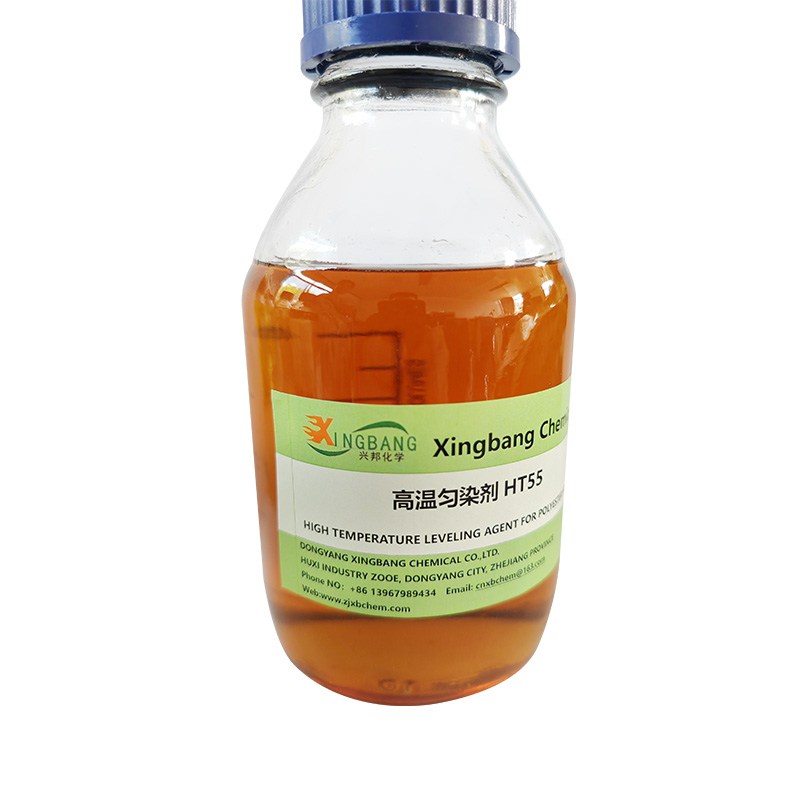
When working with reactive dyes, manufacturers often face challenges such as uneven absorption and rapid fixation, which can compromise the appearance of the final product. A levelling agent for reactive dyes addresses these issues by moderating the dyeing kinetics. It slows the rate at which the dye reacts with the fabric, giving the dye molecules more time to spread evenly before bonding.
Reactive dyes, by their chemical nature, form strong covalent bonds with cellulose fibers. This makes them ideal for cotton and other plant-based textiles, offering long-lasting color. However, without a levelling agent for reactive dyes, these strong bonds may form too quickly, especially in areas where the dye concentration is higher, pilot to patchiness or color variation.
Using a levelling agent for reactive dyes helps achieve not only visual uniformity but also performance consistency. The agent ensures that the entire fabric, from edges to center, receives the dye equally, preventing issues such as "tailing" or "center-to-selvage" variation that often appear in continuous dyeing processes.
Additionally, the levelling agent for reactive dyes contributes to better dye fixation. By evenly distributing the dye across the fabric, the agent ensures that more dye molecules participate in the chemical bonding, reducing wastage and enhancing the depth of color. This is particularly beneficial for deep shades and complex color formulations.
Compatibility is another reason why the levelling agent for reactive dyes is widely used. It integrates seamlessly with various dye classes and dyeing methods. Whether using hot brand, cold brand, or high exhaustion reactive dyes, the levelling agent supports their performance. It is also compatible with softeners, dispersing agents, and pH buffers commonly used in the same bath.
Sustainability is increasingly becoming a focal point in textile operations. Many modern levelling agents for reactive dyes are formulated to be environmentally friendly, with low toxicity and high biodegradability. Their use can help manufacturers comply with global eco-certifications like OEKO-TEX®, GOTS, and ZDHC.
Moreover, the cost-saving aspect of using a levelling agent for reactive dyes cannot be overlooked. Fewer reworks and rejects mean lower production costs and more efficient resource use. As water, energy, and chemical savings become more critical for competitive operations, the levelling agent plays an essential role in achieving these efficiencies.
From a practical standpoint, integrating a levelling agent for reactive dyes is straightforward. Dyers typically add it to the initial bath, allowing it to condition the fabric and dye mixture before the application of alkali or other fixatives. The dosage can be adjusted depending on fabric weight, dye type, and desired shade depth.
Beyond traditional textiles, industries like sportswear, medical fabrics, and automotive interiors also benefit from the levelling agent for reactive dyes. In these applications, consistency and reliability are non-negotiable, and any color inconsistency can be grounds for product rejection.
The levelling agent for reactive dyes is not just an optional additive—it’s a critical part of any high-quality dyeing process. By improving evenness, fixation, and compatibility while supporting environmental and economic goals, it serves as a cornerstone of modern textile finishing. Manufacturers seeking better product performance, improved customer satisfaction, and enhanced operational efficiency will find levelling agents to be a worthwhile and strategic investment.